The many meanings of a seemingly simple word. Prego!
Learning a few words of Italian before your trip is a lovely idea. You’ll master grazie in about four seconds. Then someone answers you with prego, and the fun begins.
Prego is the Swiss Army knife of Italian words. It comes from pregare, “to pray” or “to beg,” so it literally means “I pray (you).” In practice, it means… well, that depends on who’s saying it, where, and what their hands are doing at the time.
Eight ways you’ll hear “prego” in Italy
1. “You’re welcome.” The classic. You say grazie, they say prego. Conversation complete, everyone happy.
2. “After you.” Two people, one doorway, a sweeping gesture of the hand: prego. Italians can keep this polite standoff going for a surprisingly long time.
3. “Come in.” Knock on a door and you’ll often hear prego! from the other side. It’s an invitation, not a prayer.
4. “Please, have a seat.” Usually paired with a nod toward a chair, and often stretched into prego, si accomodi (“please, make yourself comfortable”).
5. “Here you are.” Handing over your espresso, your change or your train ticket, the barista or shopkeeper will say prego.
6. “What can I get you?” In a shop or bar, a crisp prego? with a rising tone means “Your turn, what would you like?” This is your cue to order, not to say “you’re welcome” back.
7. “Sorry, could you say that again?” Also with a rising tone, prego? can mean “Pardon?”, usually in more formal settings. If your carefully rehearsed Italian sentence gets this reaction, don’t worry: it happens to all of us.
8. “Go ahead, by all means.” Ask posso? (“May I?”) before taking a photo, trying a bite or sitting on that sunny bench, and prego is a cheerful yes.
The one thing “prego” doesn’t usually mean
English speakers often expect prego to mean “please” when asking for something. For that, Italians normally say per favore or per piacere: un caffè, per favore. You may hear un caffè, prego, but it sounds rather formal, a bit like ordering an espresso while wearing a top hat.
And if you want to sound like a local when someone thanks you, try a variation: di niente (“it’s nothing”), figurati (“don’t mention it,” informal) or non c’è di che (“not at all”).
And the sauce?
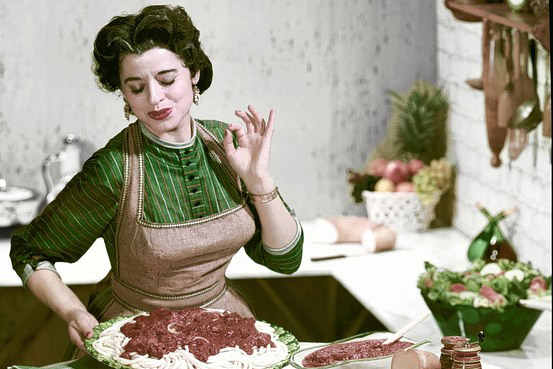
You won’t find Prego sauce on Italian supermarket shelves. When Italians are in a hurry, they make the sauce while the pasta water boils. A favorite is a quick puttanesca sauce made from pantry staples: tomatoes, olives, capers and chili. Even faster is aglio, olio e peperoncino: warm a couple of tablespoons of olive oil with a clove or two of garlic and a chili pepper over low heat for a minute or two (don’t let the garlic burn), then toss with spaghetti. Whether to add grated Parmigiano is a debate that has divided Italian families for generations. We say a good handful never hurt anyone.
If you’d like to practice your prego in person, you’ll hear it dozens of times during a cooking week with us, usually followed by something delicious. And for more Italian with a side of food, try our 30 Italian sayings involving food.