
Cipolla di Certaldo: the onion Boccaccio made famous
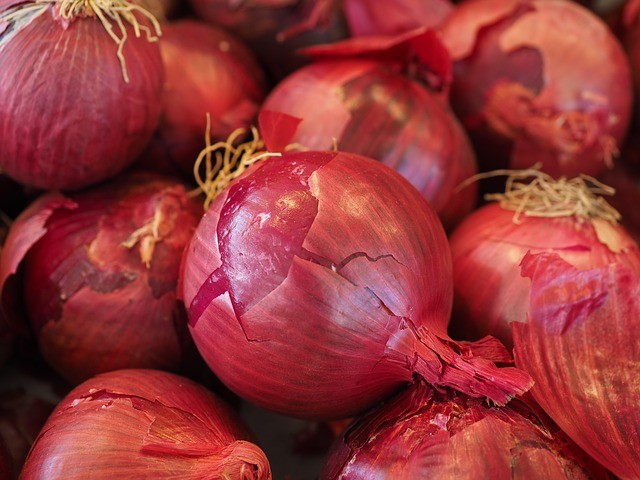
Certaldo’s onions
Certaldo is our nearest town, and our guests visit it during their week with us. It’s known for two things: Giovanni Boccaccio, the author of the Decameron, and a red onion that has been grown in the fields around it since the Middle Ages.
An onion on the coat of arms
The onion is so much a part of Certaldo’s identity that it appears on the town’s coat of arms, probably since the 12th century, when the Counts Alberti ruled the area. It comes with a motto: Per natura sono forte e dolce ancora, e piaccio a chi sta e a chi lavora, “By nature I am strong and sweet, and I please both those who stay at home and those who work”. In the friendly rivalry between neighboring towns, the people of Certaldo are still nicknamed cipolloni, “big onions”.
Fra Cipolla, Brother Onion
Boccaccio spent his last years in Certaldo and is buried in the old upper town, Certaldo Alto. In one of the Decameron’s funniest tales (the tenth story of the sixth day), a sly friar called Fra Cipolla, Brother Onion, comes to Certaldo every year to collect donations. The locals are always glad to see him, Boccaccio tells us, perhaps as much for his name as for their devotion, because the land around Certaldo produces onions famous all over Tuscany.
Fra Cipolla promises to show the villagers a feather from the wing of the Angel Gabriel. Two pranksters swap it for a few lumps of coal, and he talks his way out of trouble by declaring that these are the very coals on which Saint Lawrence was martyred.
Two onions, two seasons

Aerial view of the old Certaldo
There are two kinds of Certaldo onion. The statina is the summer onion: light purple, juicy and fairly sweet, it’s wonderful raw in salads and in panzanella. The vernina is harvested in the fall: dark red, slightly flattened and much more pungent, it keeps through the winter and is the one to cook with. You’ll find the vernina in shops around the area, while the statina is mostly sold directly by local growers and at village festivals.
Saved from disappearing
By the end of the 20th century, Certaldo’s onion had nearly disappeared from the fields. Around 2000, a group of local farmers started growing it again, and it became a Slow Food Presidium, one of the projects that protect traditional foods at risk of being lost. Today it is grown mainly around Certaldo and in a few neighboring towns, including San Gimignano, Montespertoli, Castelfiorentino, Gambassi Terme and Barberino Val d’Elsa.
How Tuscans cook it
The most famous local dish is Certaldo onion soup: onions cooked slowly until soft and sweet, served over toasted Tuscan bread. Here is our recipe for Certaldo onion soup. The onions are also stewed with leftover boiled beef and tomato in lesso rifatto, which Florentines call francesina, and cooked down into a sweet onion jam to eat with cheese. They’re delicious in our baked stuffed onions too.
Where to taste it
The best time to try it is Boccaccesca, the food festival held each fall in Certaldo Alto, where local producers and restaurants serve onion dishes alongside other Slow Food products. The rest of the year, look for it in local shops and in the restaurants of Certaldo Alto, which you can reach from the lower town by funicular.
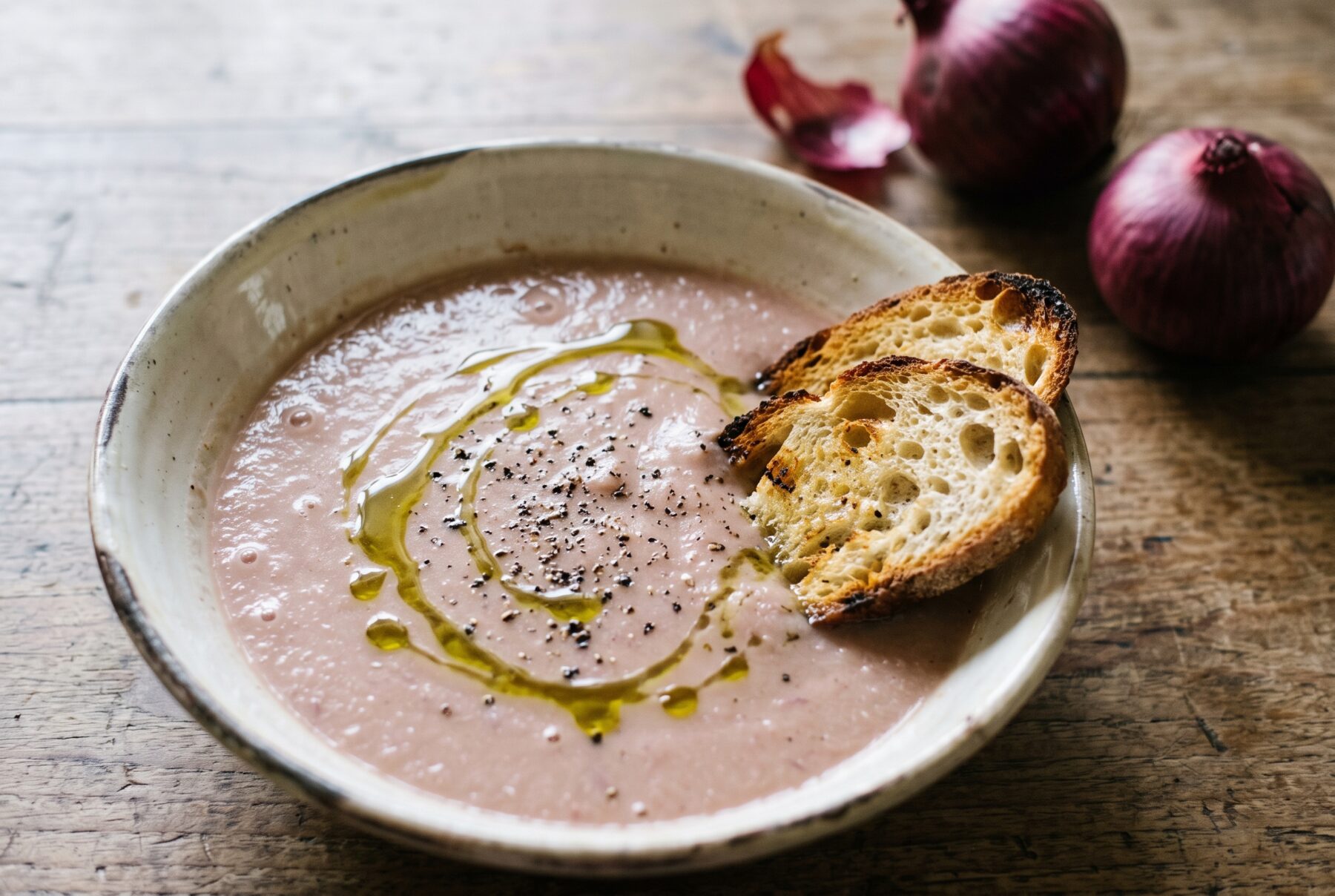
Certaldo onion soup: Tuscan red onion soup with toasted bread – Organic Tuscany Cookbook
Silky Tuscan red onion soup from Certaldo, made with onions, potato, stock and olive oil and served with toasted bread. Simple, warming and vegan.

