
Our love affair with kabocha squash (and the easiest way to cook it)
Sometimes the simplest things win you over at the first bite. That’s what happened the first time we roasted a kabocha squash: no sauce, no fuss, just olive oil, salt and a hot oven. We’ve been hooked ever since.
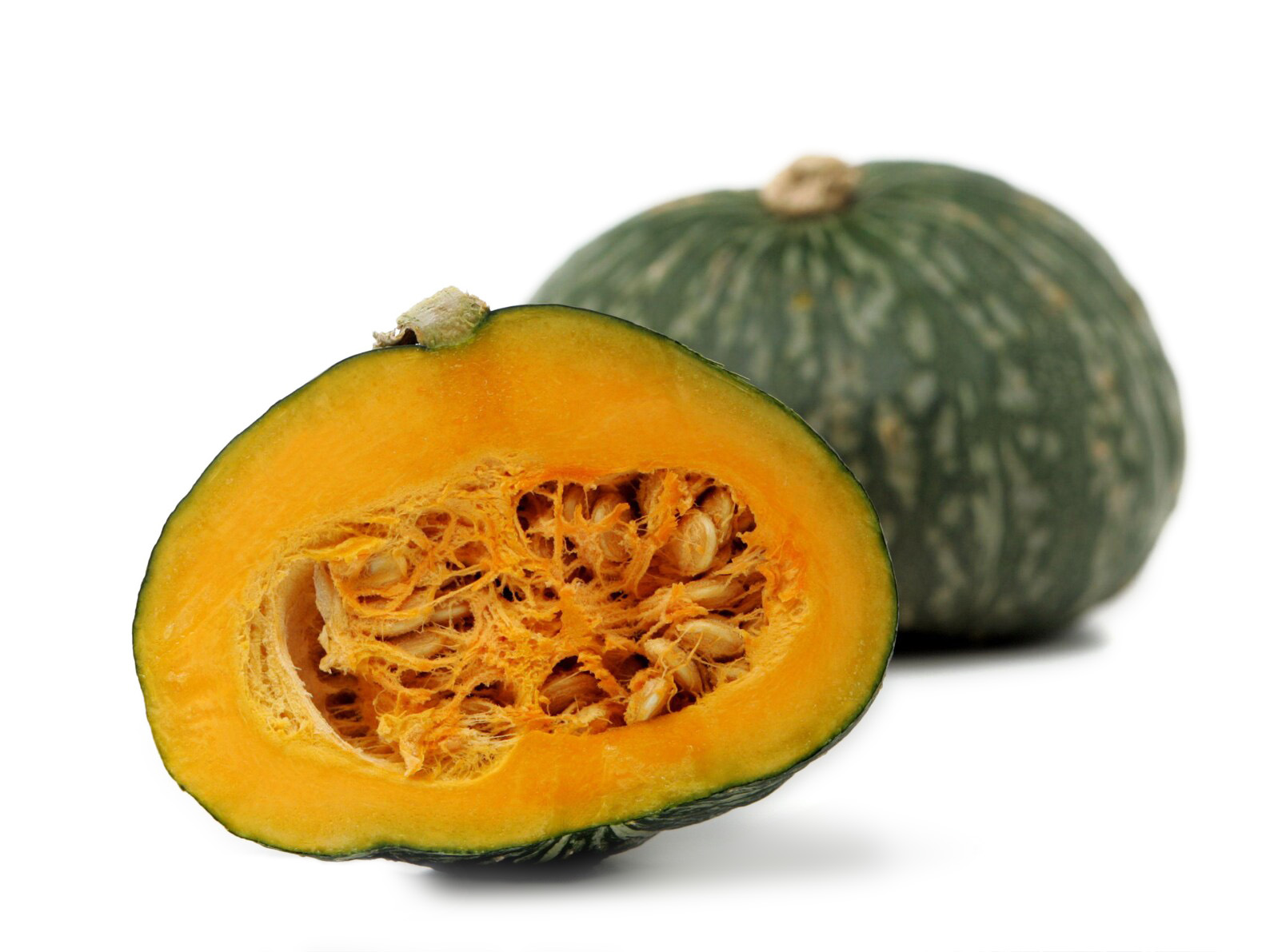
Kabocha squash
A squash with a well-traveled name
Kabocha (you may also find it sold as green Hokkaido) has a surprisingly international story. Portuguese traders brought it to Japan from Cambodia in the 16th century, and the name is a souvenir of that journey: kabocha comes from the Portuguese word for Cambodia. The Japanese adopted it wholeheartedly, and today you’ll find it in tempura, in simmered dishes and in refined Kyoto cuisine. Happily for the rest of us, it is now grown all over the world.
Why we love it
Its flesh is dense yet fluffy, smooth and creamy when cooked, with a sweetness that reminds us of chestnuts. It’s drier and sweeter than most pumpkins, so it roasts beautifully instead of turning watery. And the dark green skin softens in the oven and is perfectly edible, so there’s no peeling. It’s also good for you, with plenty of beta carotene, vitamin C and potassium.
How to choose and cut it
Look for a squash that feels heavy for its size, with a dull, hard skin and a dry, corky stem. Kabocha actually gets sweeter after a few weeks in storage, and a whole one keeps for a month or more in a cool, dry place.
The skin is tough, so cutting it takes a little care. Use a large, heavy knife on a cutting board that doesn’t slip. If it resists, put the whole squash in the oven or microwave for a few minutes to soften the skin. Halve it, scoop out the seeds (you can roast them, too), and cut the halves into wedges.
Our favorite way to cook it
Toss the wedges with a drizzle of extra virgin olive oil and a sprinkle of coarse salt, spread them on a baking sheet, and roast at 430 °F (220 °C) for 30–40 minutes, until tender inside and nicely browned at the edges. That’s it. Serve it as a side dish, toss it into a salad with arugula and toasted seeds, or simply eat it straight from the pan, as we often do.
Kabocha is also lovely in soups, and it works in place of butternut squash in our baked squash gnocchi in tomato sauce and our buckwheat crespelle with squash, chestnuts and ricotta.
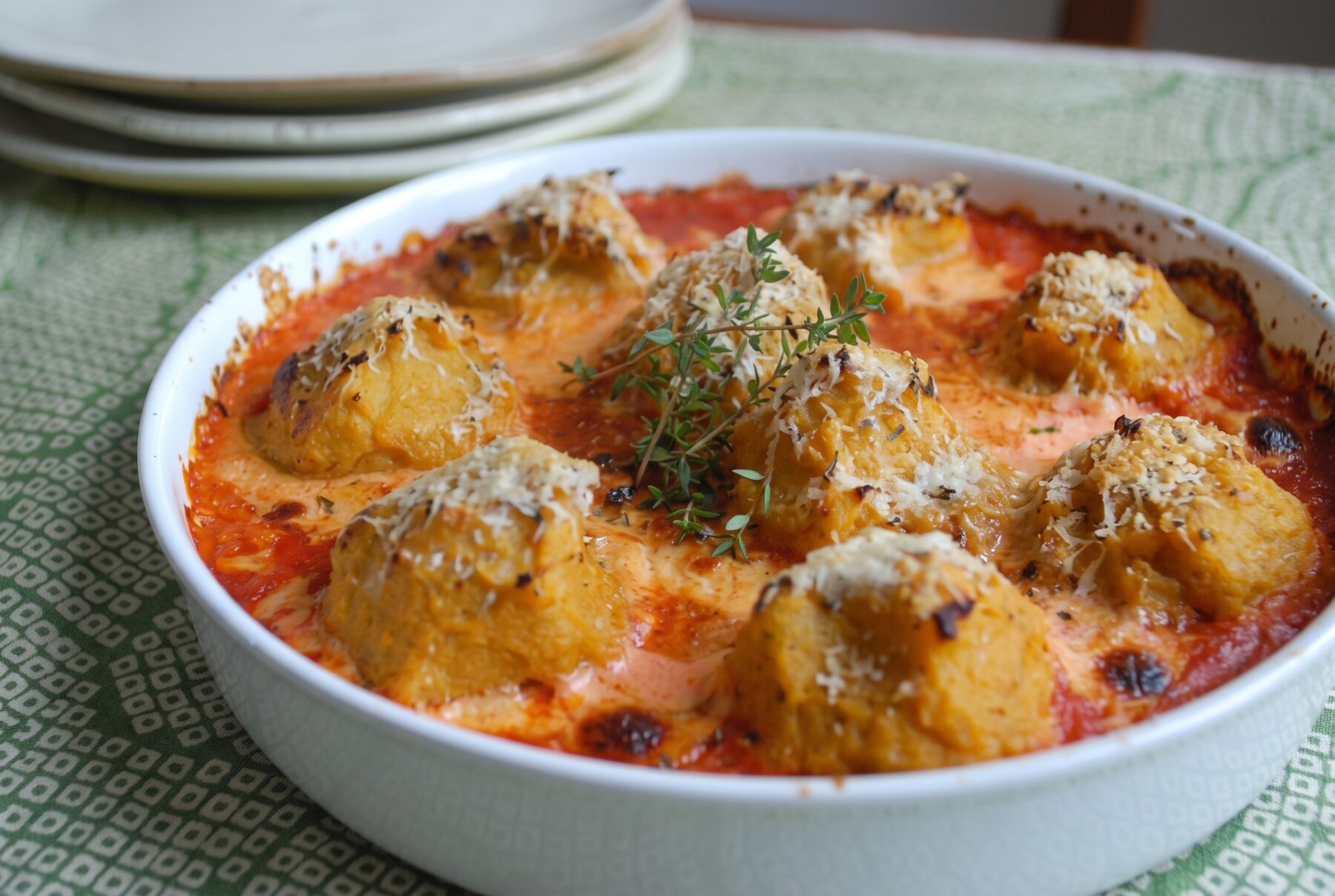
Baked butternut squash gnocchi in tomato sauce – Organic Tuscany Cookbook
Baked butternut squash gnocchi: creamy squash dumplings in tomato sauce, topped with Parmesan and baked until golden. A cozy vegetarian fall dish.
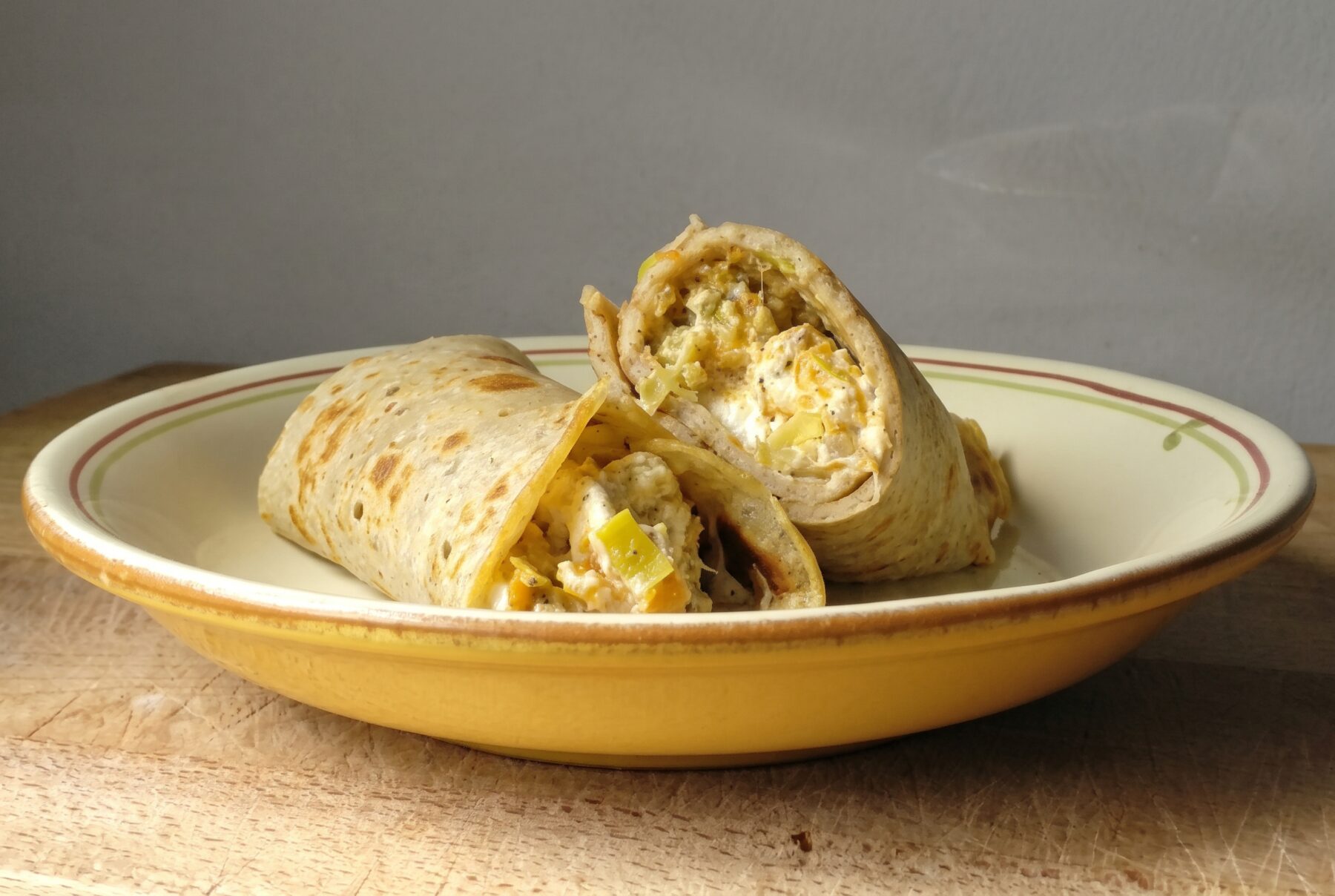
Buckwheat crespelle with squash, chestnuts and ricotta – Organic Tuscany Cookbook
Buckwheat crespelle filled with butternut squash, leek, chestnuts and ricotta. A cozy vegetarian autumn main from our Tuscan cooking classes.
