
Florence without the crowds: tips from a local
I grew up in Florence in the 1960s, when it was a city mainly made up of local residents. Downtown was full of workshops: carpenters, upholsterers, gilders, bookbinders, shoemakers, each with a door open onto the street and the strong smell of glue, sawdust or leather drifting out of it. If you wanted to see the Botticellis, you walked into the Uffizi. That was it. No booking, no queues, no time slots.
When I go back today, I am greeted by an entirely different city. The workshops have mostly given way to souvenir shops and international chains, you cannot get down the narrow streets around the Duomo for all the tour groups, and the line for Michelangelo’s David curls around the block a little like fans queuing before a rock concert. If our guests spend a few days in Florence, before or after their week with us, they tend to agree that they loved it, but they were overwhelmed. The crowds, the lines, the heat in the summer, the feeling of being carried along by a river of people.
I still love Florence, and I love its art. So over the years I’ve come up with a few tricks to enjoy the city the way I remember it. None of them is a secret. They just require a little planning, the willingness to set an alarm and get out of bed, and walking a few streets away from where everybody else is going.
The city belongs to early risers
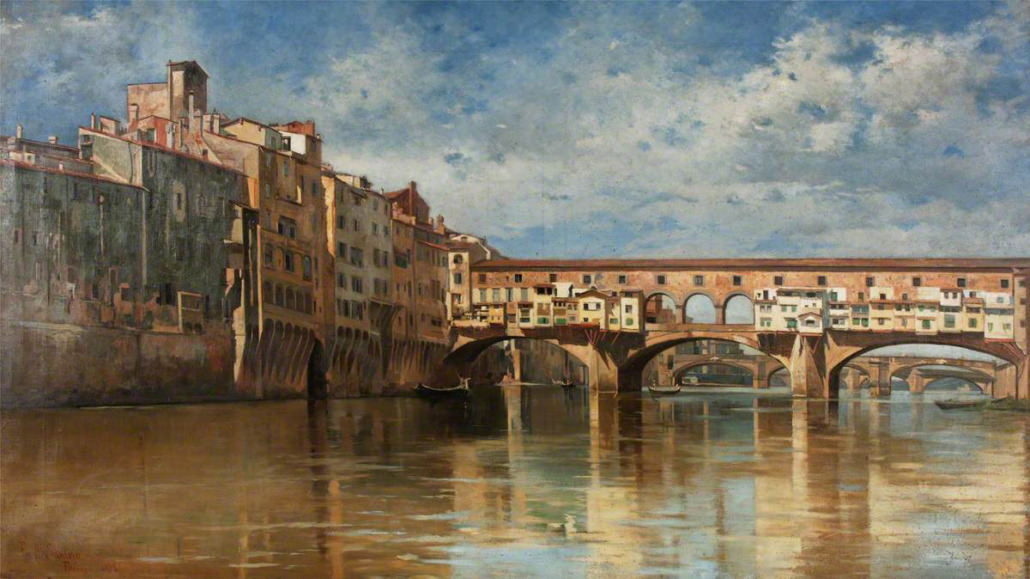
Here is an example. One June, I wanted to see the Uffizi again, so I booked for the first slot of the day: 8:15 AM. I was staying near Porta Romana, so I got up around 6:30 and walked down through the Oltrarno while the street sweepers were still at work. When I crossed the Ponte Vecchio, it was still empty: no crowds, no selfie sticks, the jewelers’ shutters still closed. Just the river and the light coming up behind the hills. That alone was worth the early start.
I was the first in line at the Uffizi. Once inside, I did something I would normally consider a kind of crime: I strode straight past the first rooms, with their magnificent golden altarpieces by Cimabue, Duccio and Giotto, and headed for the Botticellis. I had the Birth of Venus and the Primavera practically to myself. Then onto the Leonardo room, then Michelangelo’s Doni Tondo, all alone, in silence, for as long as I liked. Two hours later, those same rooms would fill with people shoulder to shoulder, and Venus would be visible mainly through other people’s phones. Even later in the morning, you can beat the crowds. The visit starts on the top floor (the second floor) where nearly everyone crowds around the great Renaissance names: Botticelli, Leonardo, Raphael. By the time they take the stairs down to the first floor, many visitors are tired and bored and head straight for the exit. Don’t. The first floor is full of late Renaissance and Baroque masterpieces, in far quieter rooms. Look for Caravaggio’s Head of Medusa, a screaming, freshly severed head painted on a ceremonial shield for the Medici (the face is said to be Caravaggio’s own). Nearby hangs Judith Slaying Holofernes by Artemisia Gentileschi, one of the very few women of her time to make a career as a painter. Her Judith is not for the faint-hearted.
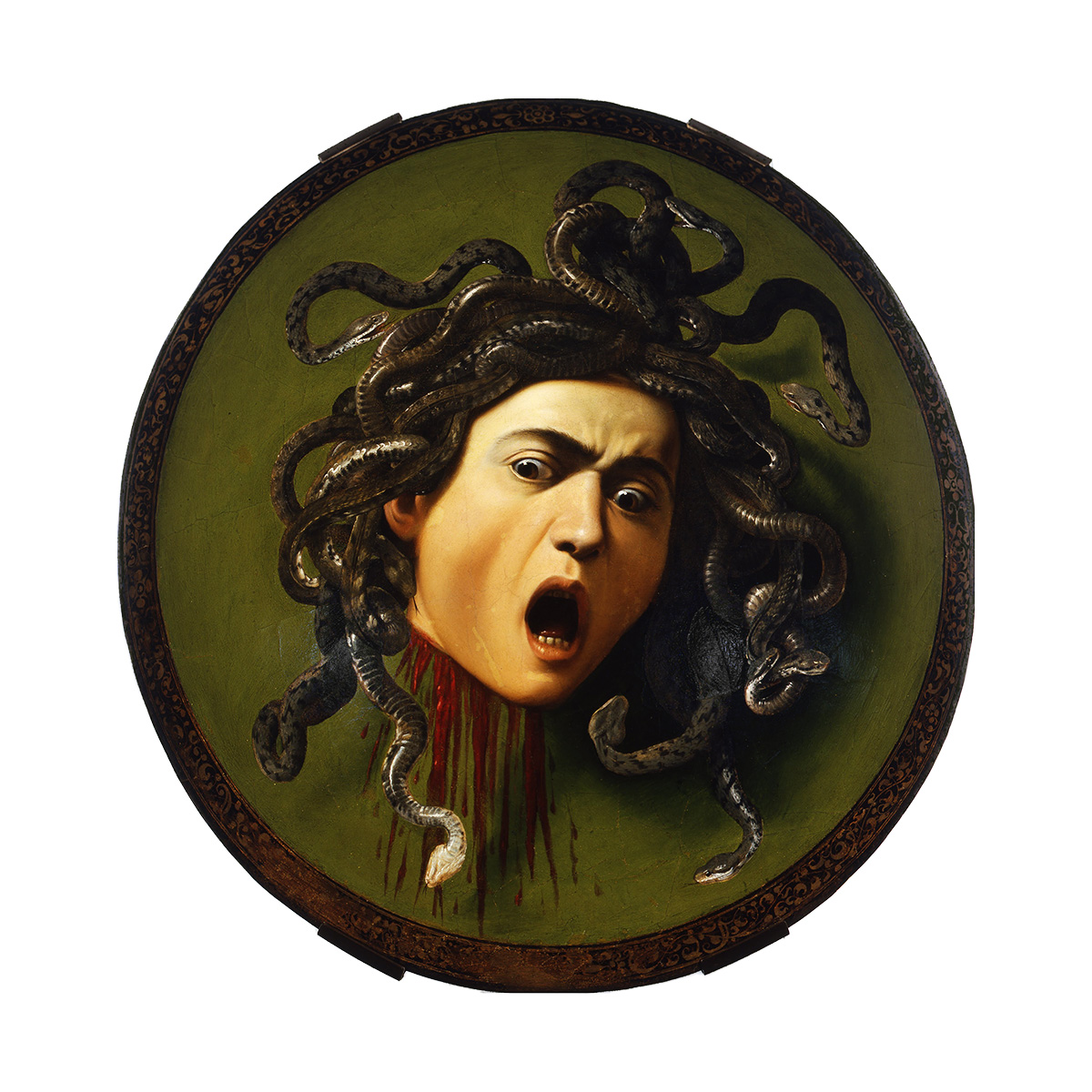
Caravaggio’s Head of Medusa
An early start has another advantage in spring and summer: the temperature. Florence sits in a bowl surrounded by hills, and by early afternoon, especially from June onward, the stone streets soak up the heat and give it back with interest. At seven in the morning the city is cool and quiet. At two in the afternoon it is hot, crowded and loud. The choice is yours, but I know which Florence I prefer.
So my first rule is simple: book the first slot of the day for the big museums, and plan your outdoor wanderings for early morning and evenings. The Uffizi even sells a slightly cheaper early-bird ticket for the first morning slots. And if you really can’t face the alarm clock going off early, the late afternoon is the next-best time, when the day-trippers start heading back to their buses and cruise ships.
Book ahead, then book some more
This is the least romantic tip, and the most important. The days of just walking in are gone, at least for the famous places. Uffizi tickets are released in batches a few months ahead, and the spring to fall early morning slots can disappear weeks in advance. The same goes for the Accademia. Book on the official websites (for the Uffizi, that’s uffizi.it) rather than through resellers who add a hefty markup, and bring your ID along on the day.
A few more things worth knowing. Most of Florence’s state museums are closed on Mondays, which means Tuesdays tend to be quite busy. On the first Sunday of every month, the state museums are free, which sounds wonderful until you see the queue. If you only have a few days, avoid that Sunday for the big museums; it’s a great day to explore the gardens and churches instead.
There is more to Florence than two museums
Here is the thing that always amazes me. Florence has several dozen museums, churches, and palaces packed with masterpieces, and yet most visitors are squeezed into just two of them: the Uffizi, to see the Botticellis, and the Accademia, to see David. Everyone wants their photo with David, and I understand why. He is magnificent, and you should see him. But very few people realize that, just a ten-minute walk away, a museum full of other Davids sits with hardly anyone looking at them.
The other Davids: the Bargello
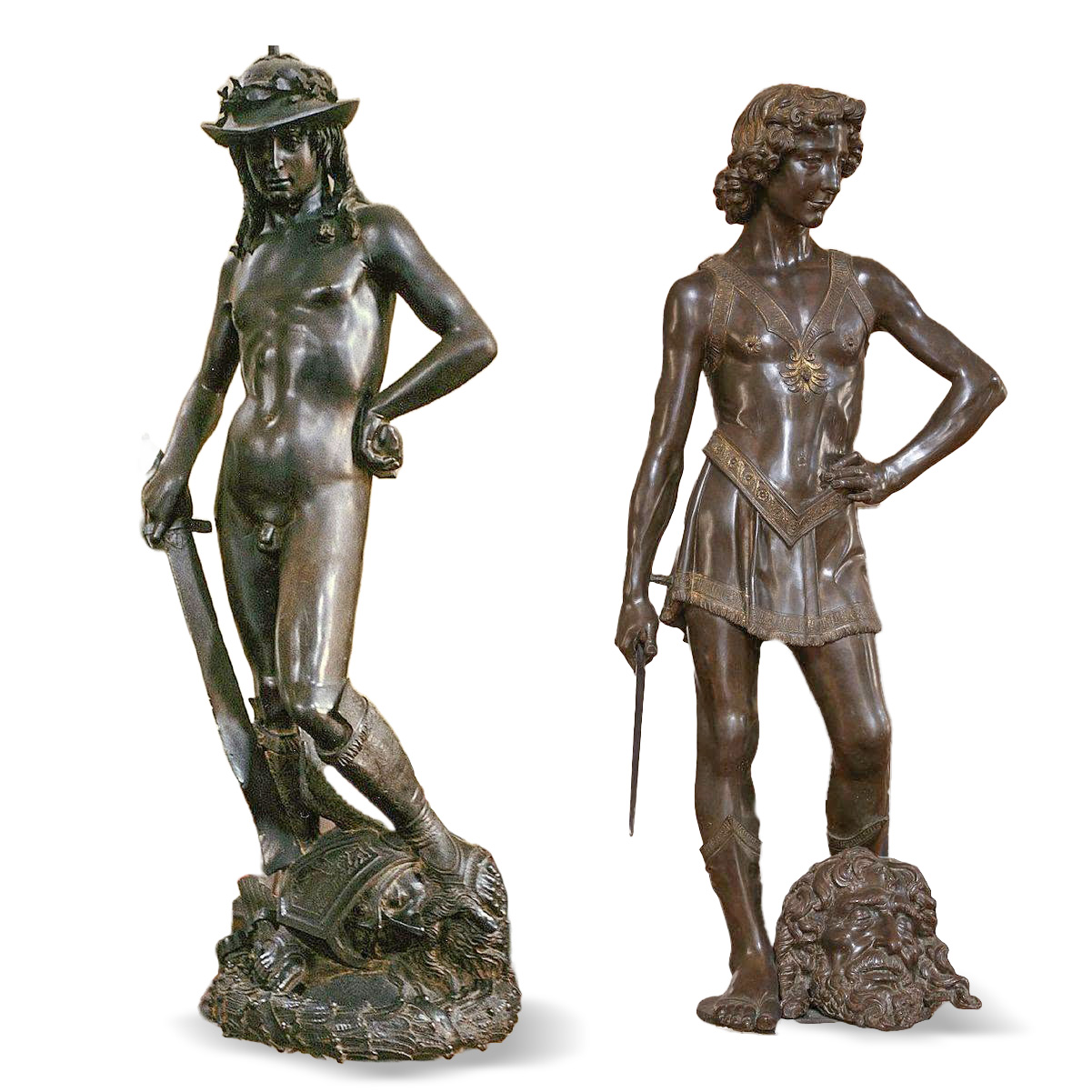
Donatello’s and Verrocchio’s Davids
The Bargello is a fortress-like medieval palace that was once the seat of the city’s chief of police (and also its prison). Today it houses the finest collection of Renaissance sculpture in Italy. It is one of my favorite places in Florence, and every time I go, I wonder why it is so empty.
Here you’ll find not one but three Davids, all of which were created before Michelangelo’s. Donatello’s bronze David, from around the 1440s, is a slender, almost dreamy teenager in a shepherd’s hat, standing on Goliath’s head in an incredibly relaxed way. It was the first freestanding nude statue that had been made since antiquity, and it still looks startlingly modern. Nearby is Donatello’s earlier marble David, and then Verrocchio’s bronze David, a cheeky, wiry boy with a confident smile. An old and much-loved story says that the model was a young apprentice in Verrocchio’s workshop called Leonardo da Vinci. Nobody can prove it, but nobody has managed to disprove it either.
And Michelangelo is here too: his Bacchus, carved when he was barely in his twenties, is a wonderfully wobbly god of wine who looks like he has had one glass too many, with a little satyr behind him helping himself to grapes. Add Giambologna’s Mercury, poised on one toe as if about to take off, and you have a morning that many visitors would trade for any queue.
A practical tip: the 48-hour pass is a single ticket that gets you into both the Accademia and the Bargello. You book a time for the Accademia, and then you have 48 hours to visit the Bargello. Take the first slot at the Accademia, say good morning to the big David before the crowds wake up, then walk down to the Bargello to see the other Davids. Like most state museums, the Bargello is closed on Mondays.
Quiet masterpieces hiding in plain sight
Once you start looking, Florence is full of places like the Bargello. A few of my favorites:
The Museo di San Marco, a former Dominican monastery near the Accademia, where the monk Fra Angelico and his assistants painted a fresco in each cell. Walking along that upstairs corridor and peeking into one small, whitewashed room after another, each with its own stunning painting, is one of the most peaceful experiences the city can offer. Check the opening hours, which are mostly in the morning.
The church of Santa Felicita, just a few steps past the Ponte Vecchio on the Oltrarno side. Thousands of people walk past it every day, and almost none of them go in. Inside, to the right of the entrance, is Pontormo’s Deposition, a swirl of pinks and pale blues that looks like nothing else painted in the 1520s. Look up, too: the Vasari Corridor runs right across the front of the church, and the Medici had a private balcony there so they could attend Mass without mixing with the riff-raff.
Cross the river
If I could give only one piece of advice, it would be this: spend time in the Oltrarno, the neighborhood on the “other side of the Arno”. It is not untouched, but it is the part of town that most reminds me of the Florence I grew up in. Some workshops have survived here, in the streets around Santo Spirito and San Frediano: you can see restorers at work, along with framers, a gilder or two and the odd shoemaker. Walk slowly and peek in.
Start at Santo Spirito, Brunelleschi’s last great church, a forest of gray stone columns that is one of the most harmonious interiors in the world. In the sacristy area, there is a wooden crucifix attributed to the young Michelangelo. The piazza outside, with its fountain and plain facade, is where Florentines meet for an aperitivo in the evening.
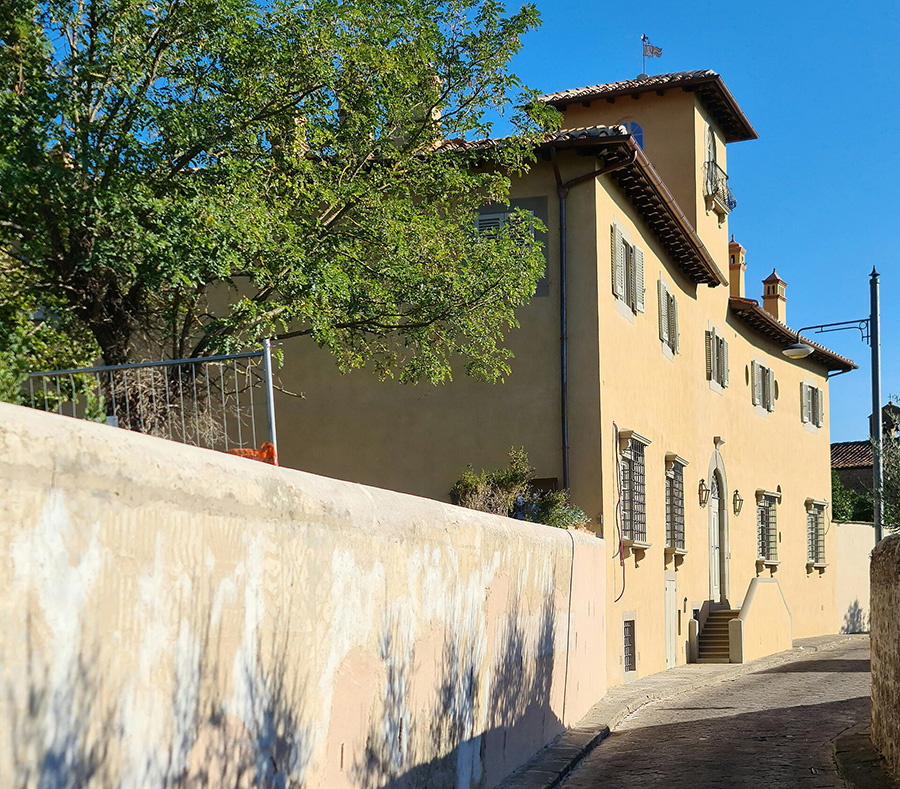
Via San Leonardo
Then walk to Santa Maria del Carmine to see the Brancacci Chapel. This is the place where, in the 1420s, Masaccio more or less invented Renaissance painting. His figures stand on solid ground, cast real shadows, and express real feelings. Adam and Eve, wailing, banished from paradise, are among the most powerful images in Western art. Michelangelo came here as a young man to copy them. The chapel is small, so you book a time slot and go in with only a handful of other people. It’s closed on Tuesdays.
From there, walk back toward the Ponte Vecchio as far as Santa Felicita, the church with Pontormo’s Deposition, and climb the steep Costa San Giorgio to the Giardino Bardini, a terraced garden with one of the best views of the city and a famous wisteria tunnel that is in flower from mid-April into early May. Keep climbing the same lane to the Forte Belvedere, the Medici fortress at the top of the hill, which opens in summer and early fall and has a view that takes in the whole city. From the fort, follow Via di San Leonardo, a narrow lane between stone walls and olive groves, and you’ll feel as if you’ve left the city altogether, although you’re only fifteen minutes from the Ponte Vecchio.
End the day at San Miniato al Monte, the beautiful Romanesque church on the hill above Piazzale Michelangelo. Most people stop at the Piazzale, take a photo, and get back on the bus. Climb the extra steps to San Miniato instead: the view is just as good, and the atmosphere is completely different. The monks who live there sing vespers in Gregorian chant in the late afternoon (check the time, as it changes with the seasons), and sitting in that dim, thousand-year-old church listening to them is something you won’t forget. If you are an early riser, the Piazzale at sunrise is also a revelation: you’ll have the whole city at your feet, and only the joggers for company.
Eat where the Florentines eat
A simple rule: if a restaurant has photos of the dishes on the menu or a menu in six languages, keep walking. Move two or three streets away from the main squares and things improve dramatically. Look for short menus that change with the seasons, and listen for Italian being spoken at the tables.
Lunch is a good time to discover the city’s everyday trattorias, many of which serve a simple fixed-price lunch. One of the most beloved is Trattoria Mario, right by the Mercato Centrale in San Lorenzo, where the Colzi family has been cooking since 1953. It’s open only for lunch and doesn’t take reservations, so here, too, it pays to go early: you give your name at the door, wait to be called, and share a table, elbow to elbow, with whoever else is there. The menu is handwritten, changes every day, and on Fridays there is fish.
Sant’Ambrogio is an area with a smaller, neighborhood market. It is a great place to see what Florentines actually buy and to grab a quick, honest lunch. You might try the lampredotto, the classic Florentine street food, sold from little kiosks around town: a sandwich of slow-cooked tripe with salsa verde. My advice is to ask to taste it first.
In the evening, Florentines eat later than most of our guests are used to, around 8:00 or 8:30, and the good places fill up with locals, so book a table, especially on weekends. If you’ve spent the day in the Oltrarno, stay there for dinner. Trattoria La Casalinga, a few steps from Piazza Santo Spirito, was opened in 1963 by two sharecroppers from the Chianti, and their families still run it. Its menu of Florentine classics, from ribollita to peposo and boiled meats, has hardly changed in decades, and its prices are among the fairest in town. In San Frediano, the Antico Ristoro di’ Cambi has been feeding Florentines since 1950 under the brick vaults of a former 16th-century convent, with hams hanging from the ceiling. This is the place for a bistecca alla fiorentina, served the only way a Florentine will eat it: very rare.
As for gelato, be suspicious of brightly colored mountains piled high in the window. Real gelato is kept in covered metal tubs, and good pistachio is a muted, brownish green, not the color of a highlighter pen. After the David, walk a few steps down Via Ricasoli to Carabè, where the Lisciandro family has been making gelato and granita the Sicilian way for over thirty years, with ingredients from their native island.
Pace yourself
The biggest mistake I see is when people try to do too much. Florence is small, but it is dense, and three museums in one day will leave you with a blur of Madonnas and sore feet. One major museum a day, plus one small place and a long walk, is plenty.
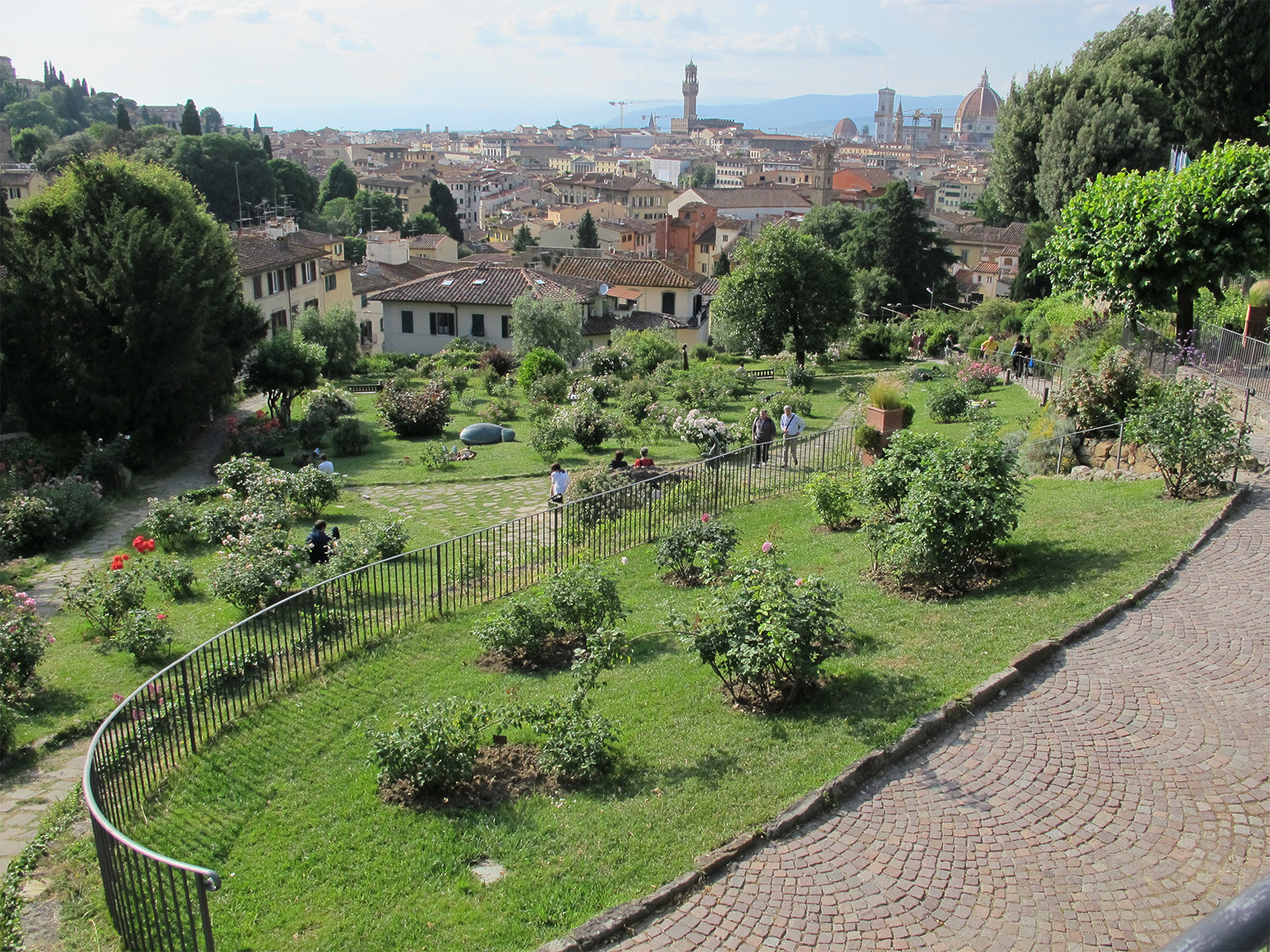
The rose garden in May
The middle of the day, when the day-trippers and cruise groups arrive and the temperature rises, is the moment to have a long lunch, retreat to a park, or go back to your room for a rest. Then come back out in the late afternoon and evening, when many visitors have left, and the city breathes again. Two more practical tips. Wear comfortable shoes, because Florence’s cobbled streets are beautiful but merciless. And don’t drive into the center: most of it is a restricted traffic zone, and the fines arrive months later (there is more about this in our guide to driving in Italy). Stay centrally, or in the Oltrarno, and walk everywhere.
If you’re joining us in May or September
Many of our guests spend a few days in Florence before or after their week with us, and May and September are two lovely times to be here. They are also busy months, so everything above applies, especially booking ahead.
In May the city is green and the plants in the parks are in flower. The Iris Garden, just below Piazzale Michelangelo, only opens for a few weeks, from late April to around the third week of May, when the iris, the symbol of Florence, is in bloom. That is also the time the Rose Garden, a little further down the hill, is at its best. Mornings are cool and perfect for walking, though by mid-afternoon it can already feel like summer. The Forte Belvedere, on the other hand, is usually still closed in May, so enjoy the view from the Bardini Garden instead.
In September, the light turns golden, and the temperatures gradually fall, although the first part of the month can still be hot, so the early-morning strategy really pays off.
During your week with us, you’ll see Florence: a day in the city is part of the program, with a guided tour included. On Wednesday we wave you off at Certaldo station, and you take the train into Florence on your own. It’s easy and relaxing: no driving, no hunting for parking, no worrying about restricted traffic zones. The train brings you right into the center of town, where Elisabetta, our wonderful guide, will be waiting for you. She is a native Florentine, one of the few who still live in the historic center, and walking around with her, you’ll see the city through a local’s eyes.
She might take you through the Mercato Centrale in San Lorenzo, where she knows pretty much every stall owner by name. Expect to be introduced to the cheesemonger, offered a taste of something you’ve never heard of, and told which stall makes the best whatever-it-is. Then she’ll lead you away from the crowds, down side streets and into courtyards, to discover the little gems most visitors walk straight past. I grew up in Florence, and yet our guests often come back from their day with her talking about places I never knew existed!
The Florence I remember is still there
The Florence of my childhood hasn’t disappeared. It has just become a little harder to find. You’ll see it early in the morning on an empty bridge, in a quiet room with a Caravaggio all to yourself, in a workshop in San Frediano, at vespers in San Miniato, or at a crowded trattoria table where only a few people are speaking English. It takes a little more planning than a couple of decades ago, an alarm clock and some willpower, but it is well worth it.
Opening hours, booking rules, and ticket prices change often, so always check the official museum websites before your visit.
