And if, after all this, you still fancy a cappuccino at four in the afternoon? Order it with a smile. Italians are far more forgiving than their coffee rules suggest, and the barista has seen it all before. When they reply “prego”, here’s what that little word really means. Buon caffè!


Do
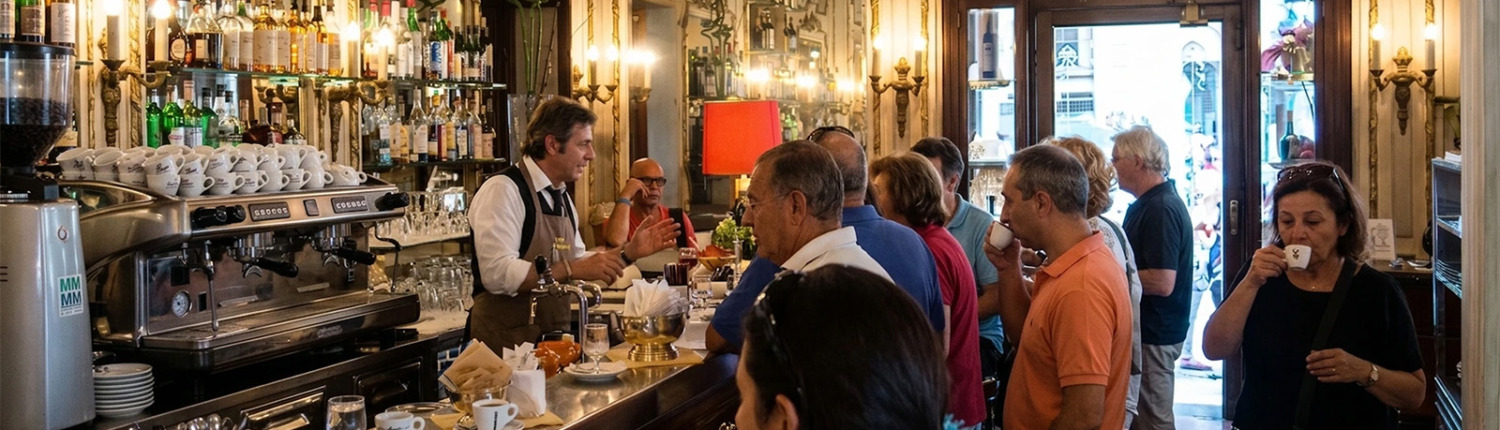
Stand at the counter (“al banco”) like a local. In Italy a café is called a “bar”, and coffee drunk standing up costs a fraction of what you’ll pay at a table, where service is added. Sit down on a terrace in a famous piazza and your espresso may come with a lovely view and an eye-watering bill.
Don’t
Order a cappuccino after lunch or dinner. Italians see it as a breakfast drink and firmly believe all that milk sits heavily on a full stomach. Nobody will throw you out, but you may catch an eyebrow rising behind the counter. And don’t expect a bucket-sized cup: an Italian cappuccino is small, frothy and gone in a few sips.
Do
Simply ask for “un caffè”. In Italy, caffè means espresso: a tiny cup of dark, intense coffee that Italians drink happily at any hour of the day. Saying “un espresso” works too, but “un caffè, per favore” will make you sound like you were born here.
Don’t
Expect drip or filter coffee. The closest thing is a “caffè americano”, an espresso topped up with hot water in a bigger cup. For something in between, try a “caffè lungo”, an espresso made with a little more water.
Do
Check whether you need to pay first. In busy bars and train stations you order and pay at the cash desk (“cassa”), then hand your receipt (“scontrino”) to the barista, who gives it a little tear and makes your coffee. If in doubt, ask “Si paga prima?” (“Do I pay first?”). Locals often leave a small coin on the receipt as a thank you.
Don’t
Linger over your espresso at the counter. A caffè al banco is a pit stop, not a picnic: three sips, a quick chat, “grazie, buongiorno”, and off you go. If you want to take your time, grab a table and accept the table price.
Do
Explore the menu beyond espresso. A “macchiato” is an espresso “stained” with a dash of milk foam, a “ristretto” is extra short and extra strong, a “corretto” is “corrected” with a splash of grappa or sambuca, and a “marocchino” layers espresso, cocoa and milk foam. Caffeine-shy? Ask for a “deca” (decaf) or a “caffè d’orzo”, made from roasted barley.
Don’t
Order a “latte” expecting coffee with milk. “Latte” simply means milk, and that’s exactly what you’ll get: a glass of it. The drink you’re thinking of is a “caffellatte”, usually a tall glass of hot milk with a shot of coffee, and mostly a breakfast thing.
Do
Be adventurous with your breakfast pastry. The “cornetto”, Italy’s answer to the croissant, comes plain, with jam or with custard, and it’s lovely. But in Florence, look out for the “budino di riso”, a little pastry tart filled with rice pudding. It’s our favorite, and we’re not sharing.
Don’t
Expect a wall of flavored syrups. Most bars now have soy milk (“latte di soia”) and many offer oat milk too, but pumpkin spice is not on the menu and probably never will be. Here, the coffee is the star of the show.
Do
Cool off the Italian way in summer. Try a “caffè freddo” (iced coffee), a “caffè shakerato” (espresso shaken with ice until frothy and served in a stemmed glass) or a “granita di caffè”, coffee ice often crowned with whipped cream. In Sicily, granita with a soft brioche bun counts as breakfast. Our favorite flavor is almond. Divine.
Don’t
Stroll down the street with a paper cup. You can ask for a coffee “da portare via” (to take away) in many places, but most Italians wouldn’t dream of it. Coffee is drunk where it’s made, ideally in good company.
Do
Say yes when you’re offered coffee in an Italian home. It will probably come from a “moka”, the little stovetop pot that hisses and gurgles on every Italian stove, and turning it down is a bit like refusing a hug.
Don’t
Be surprised when your host sweetens your coffee for you. At home, the person serving often asks how many spoonfuls of sugar you take and stirs them in before handing you the cup. Just answer quickly: the coffee is getting cold.
And if, after all this, you still fancy a cappuccino at four in the afternoon? Order it with a smile. Italians are far more forgiving than their coffee rules suggest, and the barista has seen it all before. When they reply “prego”, here’s what that little word really means. Buon caffè!